ColorGard® 2.0 and a Smarter Approach to Snow Retention on Metal Roofs
By Fiona Maguire-O’Shea, S-5! Writer
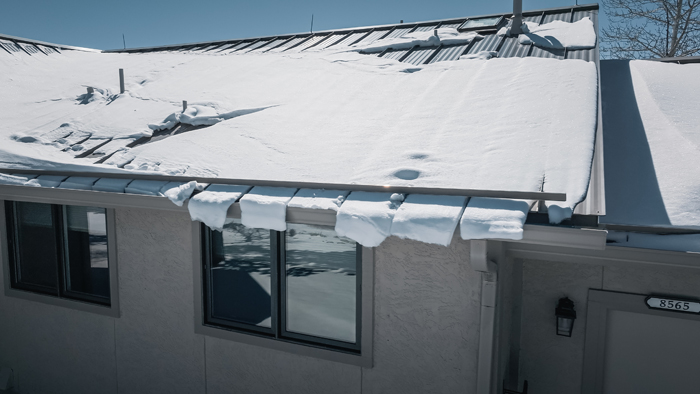
Each year, rooftop avalanches cause costly property damage, personal injury and even death. On metal roofs, snowpack can suddenly release and dump heavy volumes of snow and ice below the eaves in a matter of seconds, endangering pedestrians, vehicles,
landscaping, adjacent roof areas and other property.
That is why snow retention matters. Its purpose is not simply to keep snow in place indefinitely, but to help snow evacuate in a more predictable and controlled fashion rather than by a sudden and dangerous release. On metal roofs especially, snow retention
should be approached as an engineered part of the roof system, designed for expected snow loads, roof profile and application. That broader context helps explain the thinking behind ColorGard® 2.0.
For Jon Moss, R&D Manager at S-5!, the challenge was not inventing a new category. It was improving a product that had already earned long-term trust in the field.
“When you take something that’s almost perfect and try to improve upon it, it’s really, really difficult,” Moss said.
That challenge shaped the development of ColorGard® 2.0: preserve what already worked, while improving the installer experience and supporting a more disciplined, engineered approach to snow management on metal roofs.
Why the conversation starts with control.
In Moss’s view, one of the biggest misconceptions in the industry is the belief that the best outcome is simply to let snow shed from the roof naturally.
“The misconception that you need the snow to slide off the roof, of course, is still one that you see all the time,” Moss said. “People don’t understand that in cold climates these roofs are designed and engineered and built in
a way that does not assume that snow will slide off the roof. And a lot of times holding the snow on the roof has great benefits.”
Those benefits are practical. Controlled retention can help reduce the risk of snow falling onto vehicles, walkways and lower roof areas, while also helping manage melt more deliberately instead of allowing snow and ice to release in one sudden event.
That is why snow retention should be treated as a life-safety and roof-performance decision, not just a product choice.
A proven system, refined for the field
Moss is clear that ColorGard 2.0 was not about changing the fundamentals of the product for the sake of novelty. It was about solving real installation issues without losing what made the system successful in the first place.
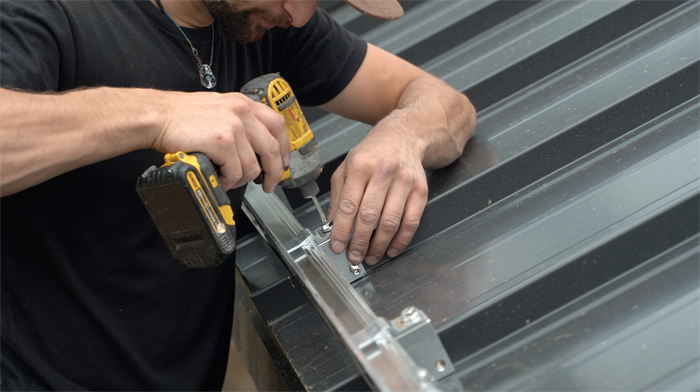
According to Moss, the two biggest drivers behind the redesign were eliminating field cutting and improving installation of interlocking components.
He said, “Installers were having to work through extra steps during the run, including measuring, cutting and managing components in sequence. On a roof, especially a steep or slippery one, those interruptions add time and create more room for frustration.”
Moss described the larger goal in simple terms: make installation easier and reduce the number of “head scratchers” on the roof.
“Less thinking on the roof, basically,” he said. “Not having to calculate when you need to cut it, not having to send parts back to the ground to be cut. You just start on the left side. It’s a seamless install until you get to
the end, and then you trim-cut any excess.”
That explanation gets to the heart of ColorGard 2.0. From Moss’s perspective, the redesign was shaped by what actually happens during installation, not just by what looks good in a brochure.
The redesign is really about how the parts work together.
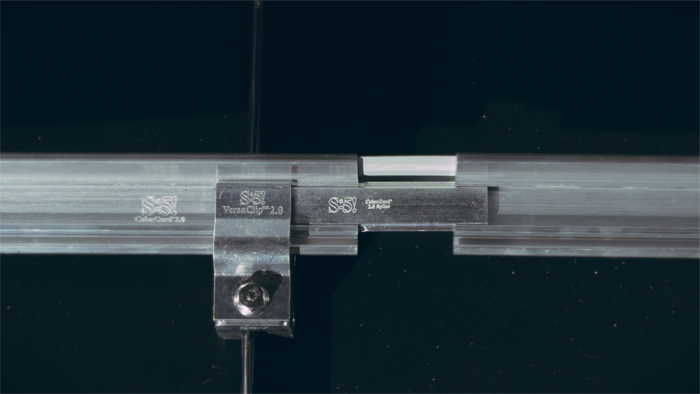
When Moss talks about the most important design improvement in ColorGard 2.0, he keeps coming back to the interaction between the splice, the crossmember and the VersaClip™.
“The splice slides to the center of it. Then the VersaClip can go on top of it,” he said. “They all can be installed in one place.”
That may sound like a small mechanical detail, but it has a meaningful impact on installation. The redesign allows the splice and VersaClip to share the same location, with a SnoClip™ installed over the splice. That helps eliminate mid-run interruptions
so crews can work more continuously from one side of the roof to the other.
In other words, the improvement is not just that the system has new components. It is that the components now work together in a way that better supports the realities of the jobsite.
Snow retention should be engineered like the rest of the building.
If there is one theme Moss returns to again and again, it is engineering rigor.
He believes snow retention is still too often treated as a generic accessory decision instead of an engineered part of the building envelope. In Moss’ view, the process should begin with a basic question: what snow load is the roof designed to carry?
From there, the system should be selected and engineered to withstand those conditions.
“What is the design snow load of the roof?” Moss said. “How much snow could potentially be on that roof? And then selecting the appropriate system to restrain that.”
He draws a direct comparison to other building components.
“Just like the building gets engineered … you should do the same thing with our ColorGard 2.0 (or any other) system,” Moss said.
That mindset matters because snow retention is not one-size-fits-all. Roof slope matters. Roof rafter length matters. Roof profile matters. Attachment method matters. Snow load matters. A retention system should be treated with the same diligence as other
specified building elements, not selected on convenience alone.
Roof-specific attachment still matters.
That same engineered approach shows up in the way Moss describes compatibility across roof types.
He said, “ColorGard 2.0 builds on the same core approach while changing how the system is assembled in the field, with the attachment tailored to the specific roof profile.”
That matters because the right retention solution cannot ignore the roof beneath it. Clamp or bracket selection has to fit the application, not force the roof into a generic solution. Moss also pointed to seam-height variation as one reason the system
includes different snow clip heights, allowing it to accommodate a range of roof configurations.
Residential or commercial, the need for snow retention remains.
Moss also sees ColorGard 2.0 as a system that works across both residential and commercial applications.
“It offers a clean look for residential and is strong enough for commercial projects,” he said.
That flexibility matters because snow behavior does not become simple just because a project is smaller or larger. Flatter commercial roofs and steeper residential roofs can create different design conditions, and residential applications can sometimes
require more snow retention than people expect because of the slope.
In practice, that means snow retention decisions should be driven by the roof and snow loads, not by assumptions about building type alone.
Performance and appearance both matter.
Even in a highly technical category like snow retention, Moss does not dismiss aesthetics.
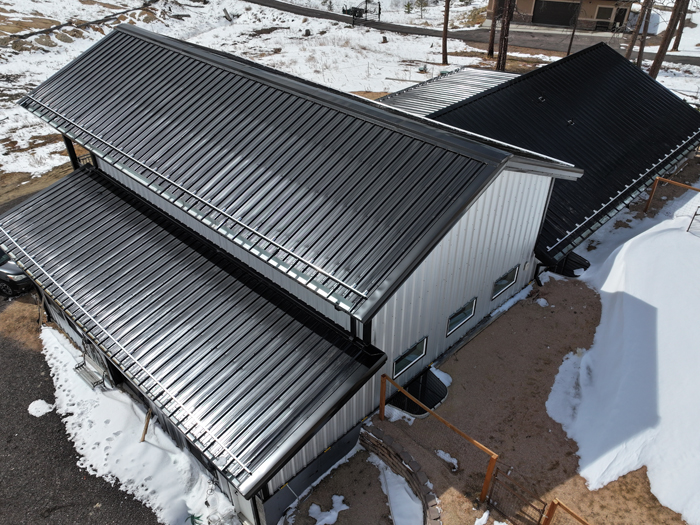
On architectural projects, visual integration still matters. As Moss put it, “If we didn’t have a next-generation aesthetic solution, people would be upset.”
That comment gets at something important. Building owners and designers do not want to choose between performance and appearance. They want a snow retention system that does its job while also respecting the roofline and the overall look of the building.
Why it matters!
ColorGard 2.0 reflects a more disciplined approach to snow retention on metal roofs — one grounded in engineered performance, roof-specific design and a more streamlined installation process.
As Moss makes clear, effective snow retention starts with understanding how snow behaves on a roof, how roofs are engineered to carry loads, and how the right system can help snow evacuate in a more predictable and controlled fashion.
ColorGard 2.0 is designed to support that kind of thinking, helping teams approach snow retention not as an afterthought, but as an integrated part of the roof system.
In that regard, it is more than a product update. It is a refinement of a proven approach to managing snow more effectively while making installation easier.
About S-5!®

Founded by a veteran metal roof expert, S-5! has been the leading authority on metal roof attachment solutions since 1992. S-5!’s zero-penetration clamps and lifetime brackets attach virtually anything to most metal roof types, while maintaining roof integrity and warranties. Made in the U.S.A., S-5! solutions are engineered for a variety of roof-mounted applications and are now installed on more than 3.0 million metal roofs worldwide, including more than
9 GW of roof-mounted solar, providing strength and longevity never before seen. For more information, visit s-5.com.


