More than Just Another Building: Why Data Center Construction Demands a Different Mindset
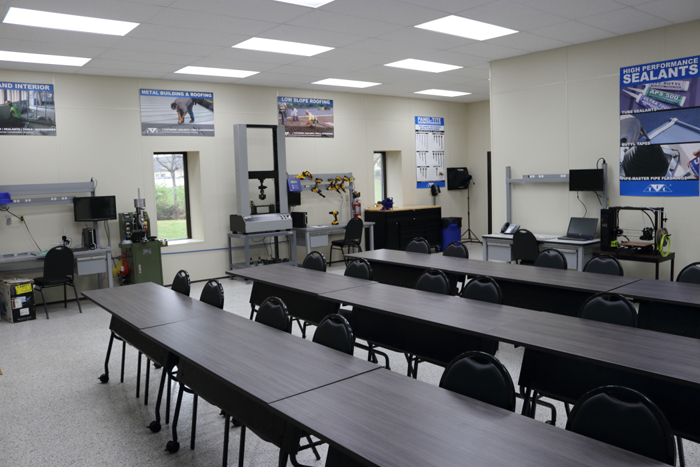
Triangle Fastener Corporation's state-of-the-art, 1,100 sq. ft. Tech Center in Cleveland facilitates the company's product development and customer training efforts. Having the right fastener for the project, installed correctly, is essential when it
comes to the construction of data centers.
By: Brendan Cadman, Triangle Fastener Corporation
When you walk onto a commercial construction project, many of the processes, material requirements, and installation practices feel familiar. While every project comes with its own unique challenges, most are ultimately designed to provide functional
spaces where people work, shop, manufacture, or gather.
Data centers are a different story altogether.
At first glance, a data center may look like another large commercial building. Beneath the surface, however, the expectations are fundamentally different. A fastening decision, installation tolerance, or coordination issue that might be relatively minor
on another project can have consequences measured not only in repair costs, but in uptime, operational reliability, and business continuity.
Data centers aren't built primarily for the people inside them. Instead, they're built to support the equipment and digital infrastructure that businesses, healthcare systems, financial institutions, cloud computing platforms, artificial intelligence,
and countless everyday services depend on. When a data center experiences an unexpected failure, the impact extends far beyond the building itself.
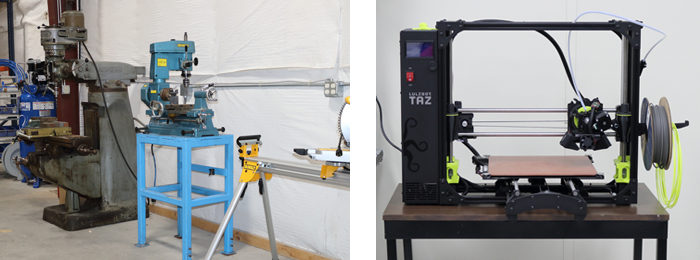
Lathes and 3D printers enable Triangle Fastener to quickly develop prototypes when custom fastening solutions are needed.
Knowing this changes not only how data centers are built, but also how they are designed, coordinated, inspected, and maintained. Every decision made during construction has the potential to influence the long-term performance of the facility. What surprises
many contractors is that the decisions with the greatest impact often aren't the largest or most visible. They tend to be the smallest details and what happens behind the scenes.
To better understand what separates data center construction from conventional commercial projects, we spoke with two professionals who design, manufacture, and support these facilities every day. Their experiences reveal why contractors entering the
data center market must approach these projects with a different mindset.
What Surprises General Contractors About Data Center Projects?
One theme that emerged consistently during these conversations was the fact that the building itself isn't necessarily the biggest adjustment, it is the speed required to complete the project and bring the facility online.
"The construction isn't necessarily what catches people off guard," said Alex Cory, Project Engineer for Nucor Data Systems. "It's the speed at which these projects move and the expectations for getting facilities online. Many contractors underestimate
how quickly decisions have to be made and how closely every trade has to work together."
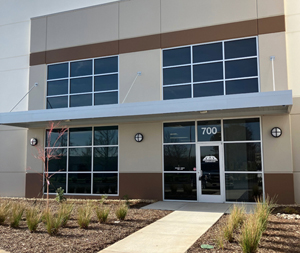 |
Triangle Fastener has 32 locations, three distribution centers and nine in-house paint facilities, and offers inventory and delivery programs that reduce waste and shorten lead times. |
|
According to Cory, success depends on understanding that a data center isn't simply another commercial project with a larger footprint. Every phase of construction is tied to an aggressive schedule, where delays in one area can quickly affect multiple
trades and ultimately impact the ability to commission the facility.
"You have to think beyond the building itself," Cory explained. "Energy efficiency, coordination between trades, and execution all have to come together at the right time. If you're only focused on your own scope of work, you're probably missing something."
What Is Different About Data Center Project Requirements?
While many aspects of the construction aspect remain familiar, the infrastructure supporting a data center dramatically changes how projects are planned and executed.
"There are plenty of similarities to other commercial projects," Cory said. "The difference is everything surrounding the building. Power availability, utility coordination, water infrastructure, and the systems required to keep the facility operating
become major parts of the project."
Many data centers are also built in locations selected based on land availability, utility access, tax incentives, or future expansion, creating logistical challenges that don't exist on many traditional commercial projects.
"If you don't understand the efficiency requirements or everything it takes to support the operation of a data center, you're going to struggle," Cory said.
How Can Small Details Become Big Problems?
One of the most consistent themes throughout the interviews was the importance of consistency. Data center projects rely on repeatable processes, standardized materials, and close attention to detail to maintain quality while meeting demanding schedules.
"The details matter," Cory said. "Whether it's fasteners, hardware, or installation methods, everyone has to understand exactly what's being specified and why."
He explained that customized components and inconsistent materials can introduce unnecessary complexity into projects where standardization and uniformity are essential.
"The more uniformed everything is, the smoother the project goes," Cory said. "Once you start introducing variations, it becomes much harder to maintain efficiency and quality across the entire job."
What Are Some Common Misconceptions About Data Center Construction?
One of the biggest misconceptions among contractors taking on a data center project for the first time is assuming they're simply building a larger office building or warehouse. While there may be elements of both that appear familiar, the performance
expectations are fundamentally different.
"Many people think it's just a warehouse on steroids," said Marty Martin, Vice President of Sales at Triangle Fastener Corporation. "The reality is far different. You're building an environment where precision, coordination, and long-term reliability
drive every decision you make."
Unlike traditional commercial buildings, which are designed primarily around human occupancy, data centers are designed around the equipment they house and the uninterrupted performance of that equipment. Higher electrical loads, specialized cooling systems,
tighter installation tolerances, and equipment-first design require a level of planning and coordination that many contractors don't fully appreciate until they're already on the project.
According to Martin, overlooking these differences can lead to redesigns, schedule delays, costly rework, and operational issues that may not become apparent until commissioning or even after the facility is operational.
What Important Lessons Can Be Taken Away From Data Center Projects?
For Cory, one of the biggest lessons learned from data center construction is that success begins long before crews arrive on site.
"A tremendous amount of planning takes place before construction even begins," he said. "Our goal is to make installation as efficient as possible for the field."
That preparation includes coordinating multiple vendors, integrating components before delivery, and designing systems that can be installed quickly once they reach the jobsite.
"We try to make it as close to a 'grab-and-go' process as possible," Cory said. "Efficiency is what ultimately creates value for the customer. That's true not just during construction, but throughout the life of the facility."
While every project presents its own challenges, one lesson became clear throughout these conversations.
Data centers demand a different level of planning, coordination, and execution than most commercial construction projects.
Contractors who recognize those differences early, and adjust their processes accordingly, will be better positioned to meet the expectations of one of the fastest-growing sectors in the construction industry.
About Triangle Fastener Corporation
Triangle Fastener Corporation is a leading provider of standard and specialty
fasteners, sealants, and tools for metal construction industries. The company has dozens of locations and can provide job-site assistance, fastener
recommendations, and product development. For more information visit the TFC website at www.trianglefastener.com. For product samples call 800-486-1832.


